

UMU, and more specifically the
Dept. of Information and Communications Engineering of the
Computer Science Faculty
provides gaia lab, a
laboratory for experimentation in
5G and B5G technologies.
virtualization infrastructure
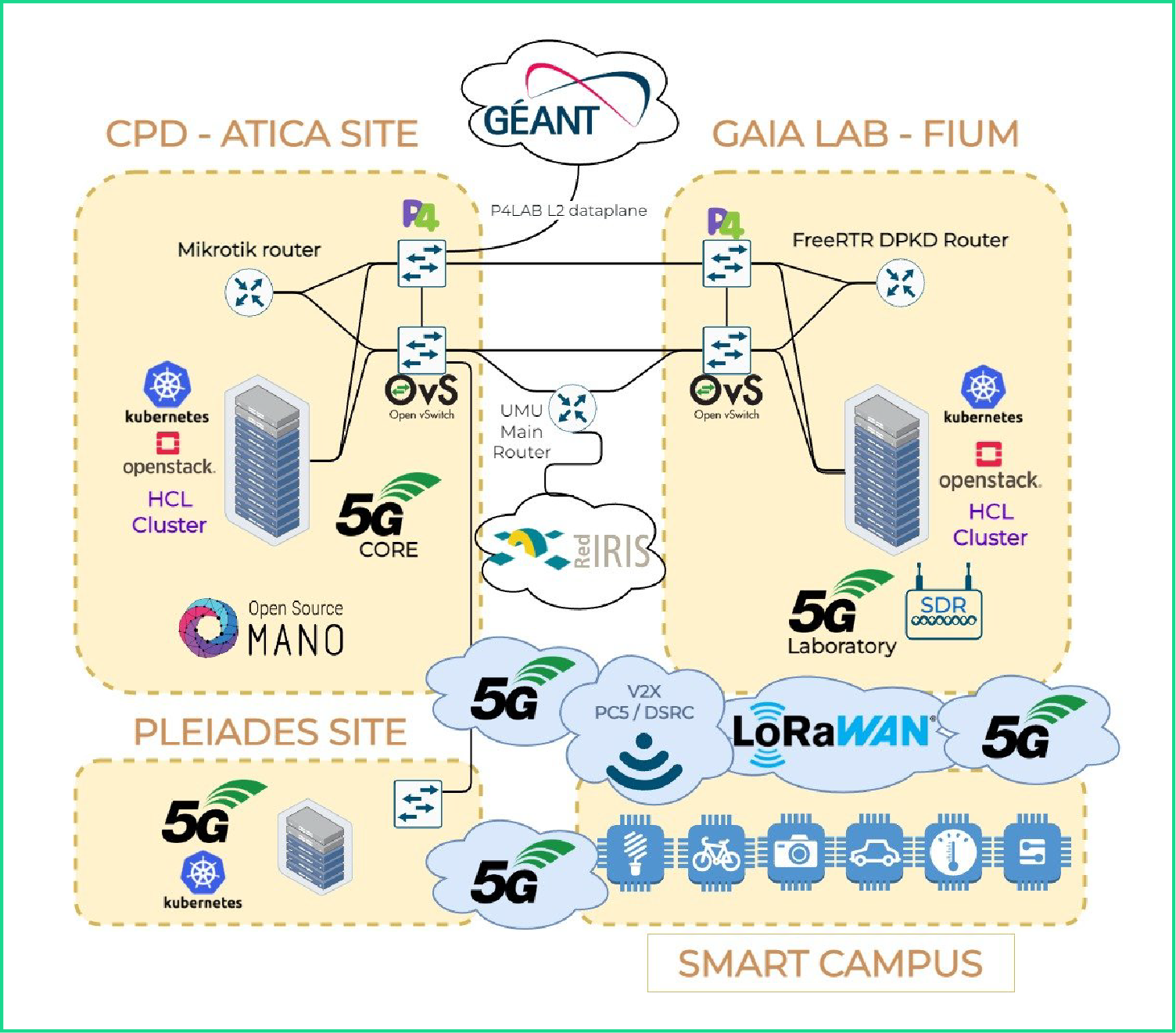
gaia lab comprises three different main sites:
ATICA, PLEIADES and GAIA.
These three data centers provide the virtualization and backhaul
infrastructure for wireless connectivity, including a
self-managed 5G infrastructure that allows
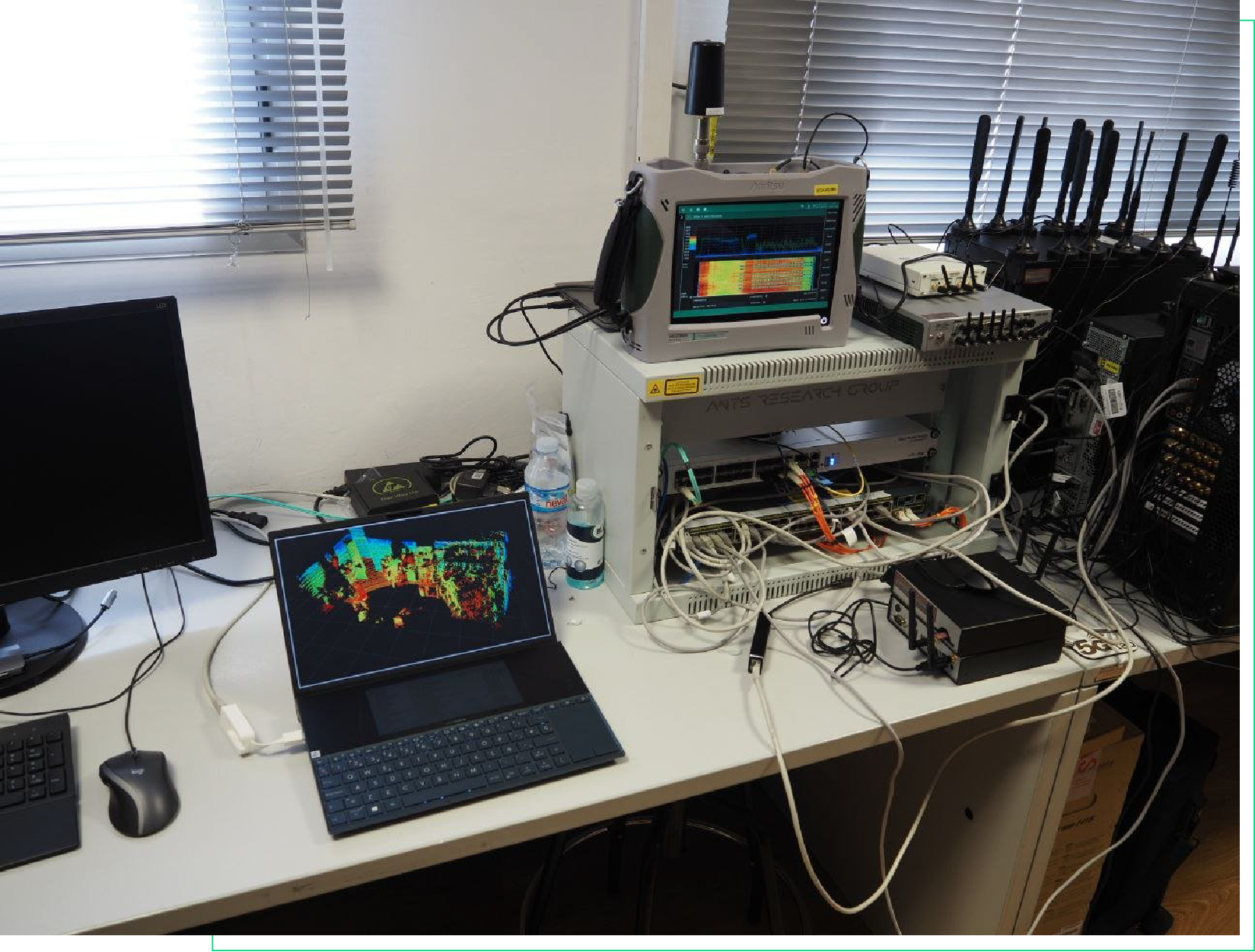
experimentation in different fields. The cloud platform hosts
core network components, as well as
SDN, NFV and MEC deployments. The
virtualization capabilities are supported by
Proxmox and
OpenStack solutions, adding up to more than
1500 CPUs and almost
15 TB of RAM. OSM and
Kubernetes are available to enable dynamic and
real-time orchestration and distributed computing.
wired network equipment
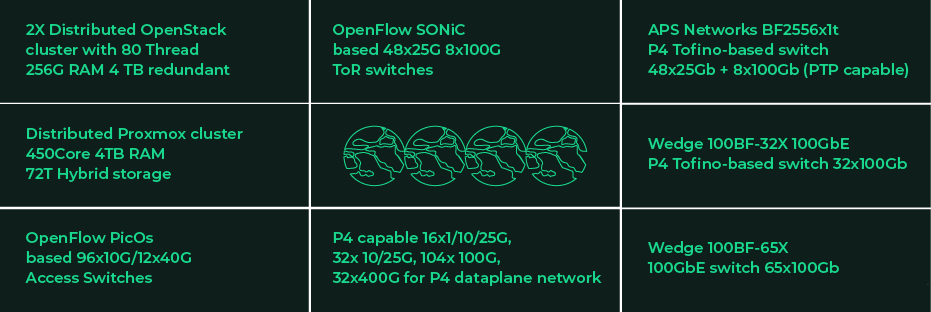
gaia lab counts with a network
infrastructure based on SONiC NOS,
featuring high availability,
100 Gbps links between sites and
25/40 Gbps links within the sites, as
well as smaller deployments around the
university campus. The network backhaul
is supported by PTP to ensure timely and
precise experimentation, and it is built on programmable
networking technologies such as
OpenFlow and P4.
GAIA 5G also implements small sites
equipped with realistic traffic injectors, emulators and
impairment generators for
low-TRL experimentation with disruptive
technologies.
features
wireless connectivity
3GPP
gaia lab provides
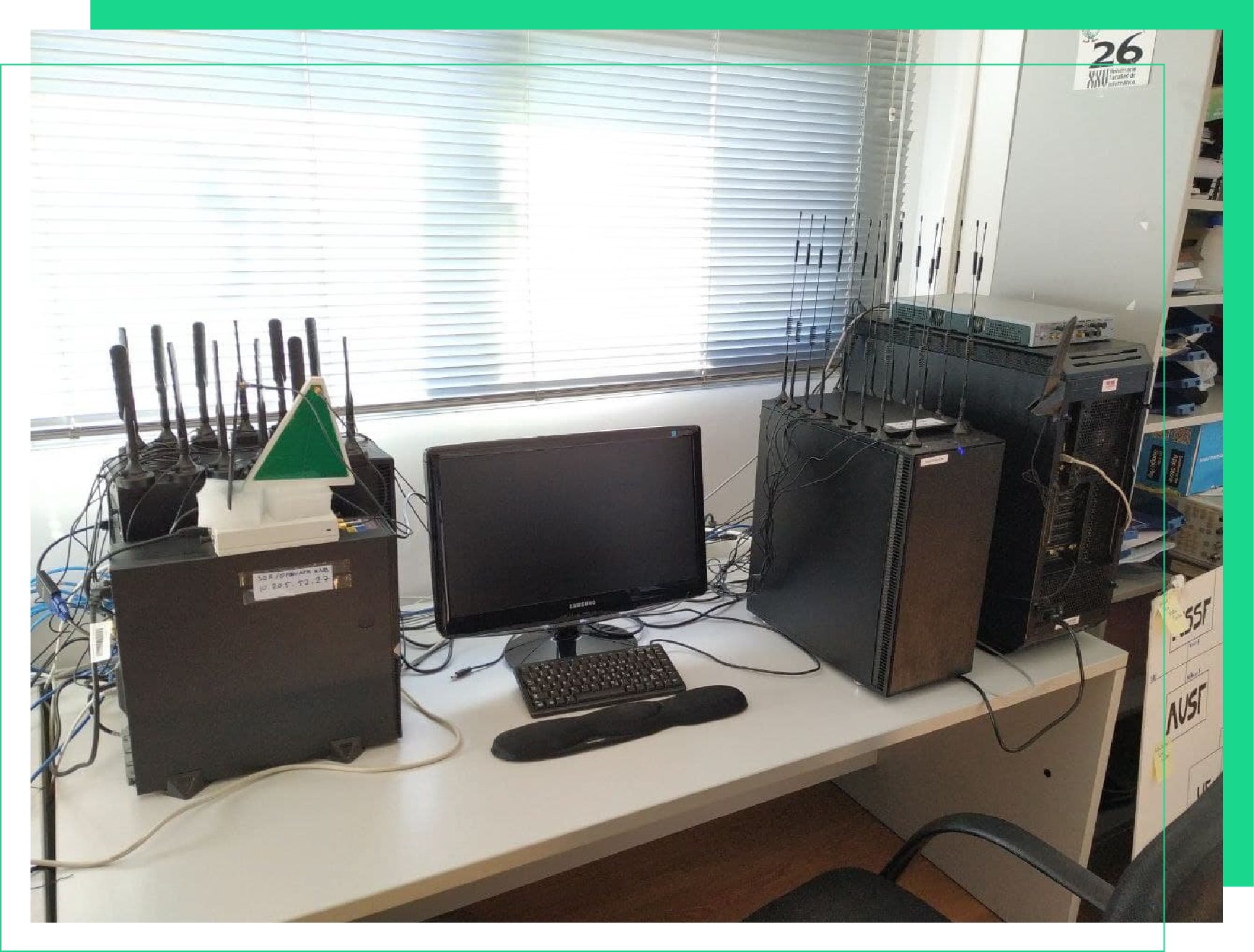
5G SA network access through
SDR technology. The infrastructure
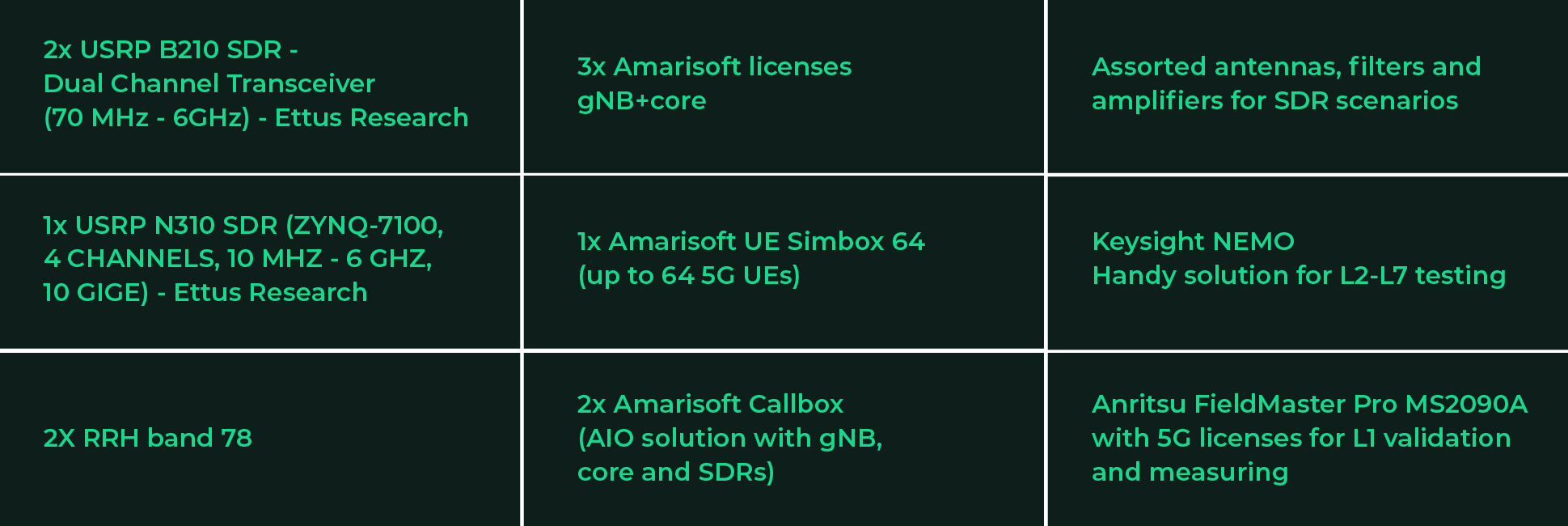
includes ETTUS B210 and
ETTUS N310 devices for experimentation,
along with additional SDR options such as
BladeSDR boards. These SDR platforms are
supported by dedicated computing resources: the B210 units
are paired with 8-core computers with
16 GB RAM, while the N310 devices operate
alongside a 16-core server based on
AMD EPYC 7302P with
32 GB RAM, enabling advanced and flexible
experimentation scenarios.
3GPP
5G SA provision is delivered through a
combination of closed-source and open-source
implementations, primarily based on
Amarisoft, Open5GS,
Nokia, OAI and
srsRAN. The outdoor campus-wide
5G network is composed of several
gNBs distributed across different
buildings, including indoor locations. The campus
infrastructure is complemented by
Amarisoft Callbox and
Simbox units, enabling comprehensive
in-lab experimentation.

IoT
gaia lab also features LoRaWAN capabilities operating in the 868 MHz band. The current infrastructure relies on two Kerlink iStation gateways located at the center of the campus. These gateways are connected to a self-deployed LoRaWAN Network Server (ChirpStack), while the received data is also forwarded to The Things Network servers. Future plans include the deployment of an additional gateway to achieve full coverage of the Espinardo campus and extend coverage to the wider Murcia area. Additionally, NB-IoT integration through external providers is foreseen as part of the platform’s evolution.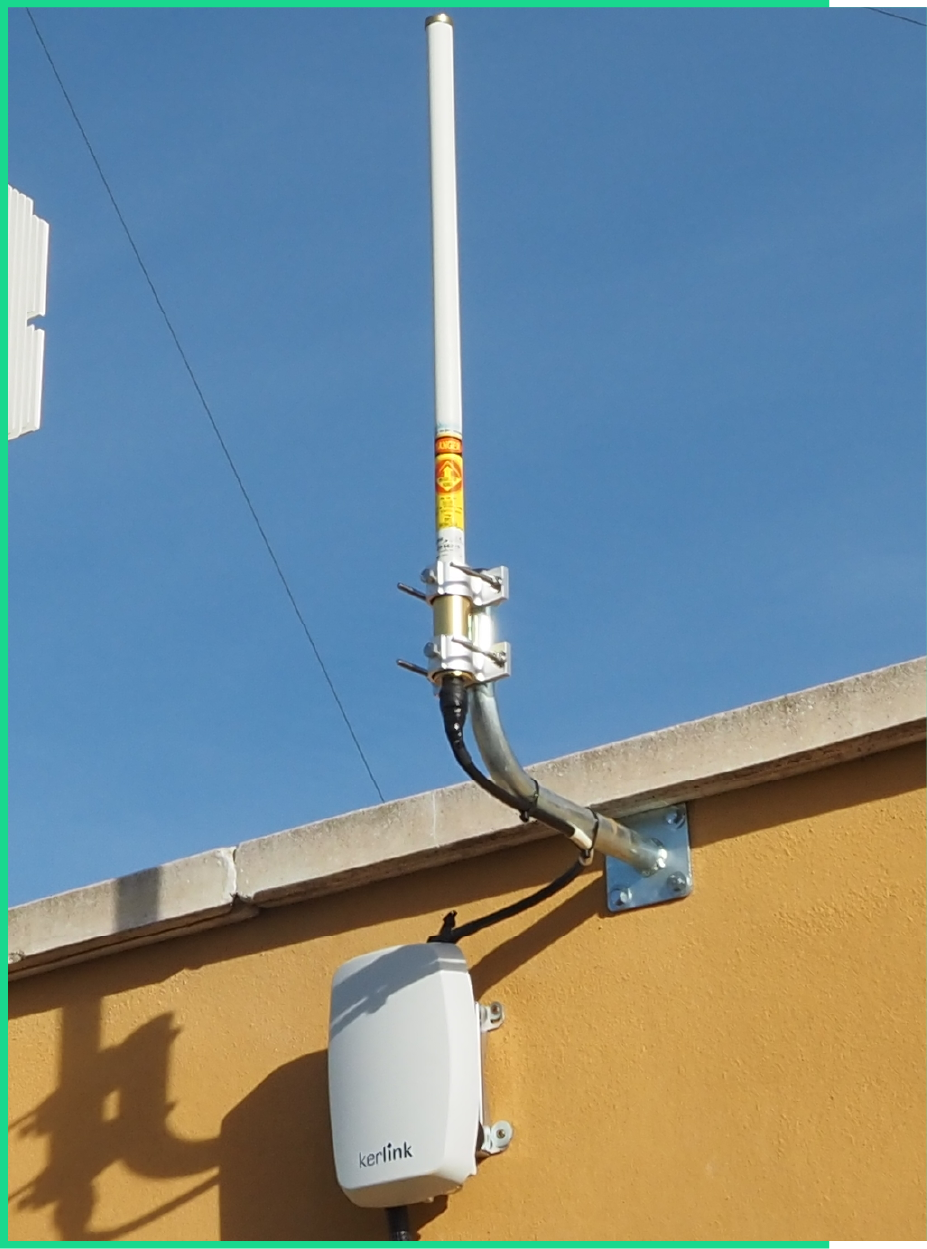
C-ITSs
To complete the
multi-access infrastructure,
5G / PC5 / C-ITS networking is available
through dual-role
RSU/OBU-capable devices, which also
integrate 5G SA connectivity. The lab
also features
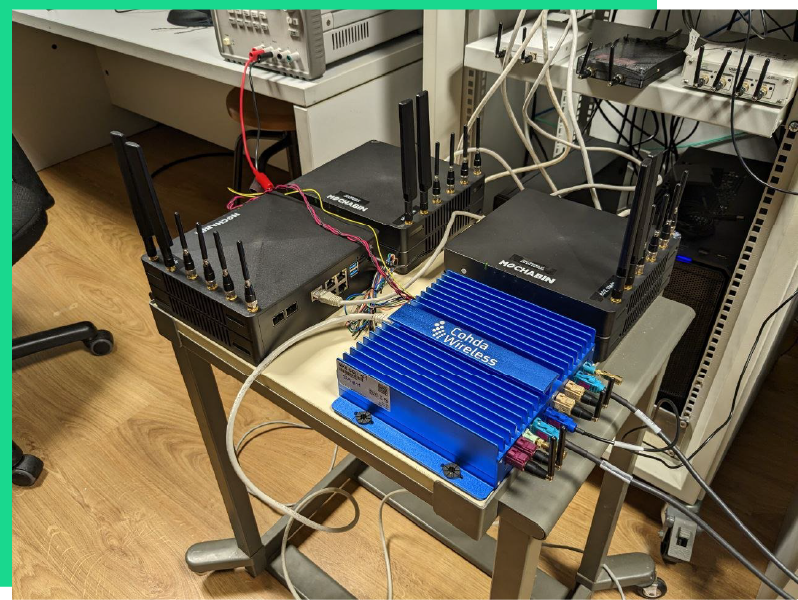
Cohda MK6 OBU/RSU units supporting
5G / PC5 / C-ITS and
802.11 / DSRC connectivity.
These units can be deployed across the
Espinardo campus on demand for
vehicular experimentation, fully integrated
into the existing infrastructure.
features
Multi-access Espinardo Campus infrastructure
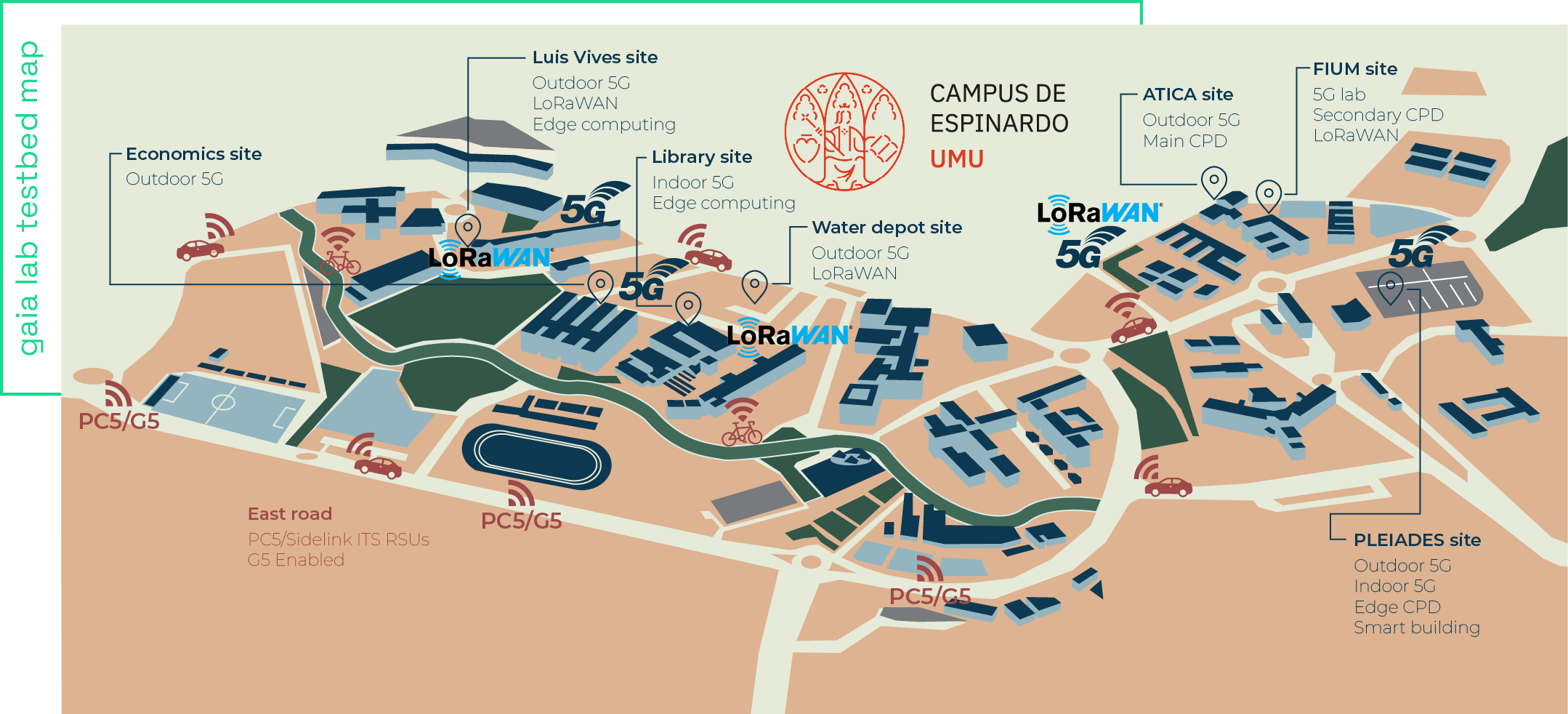
With all these devices and technologies integrated into a single
multi-access heterogeneous network, the
infrastructure map of the Espinardo campus is
presented below.
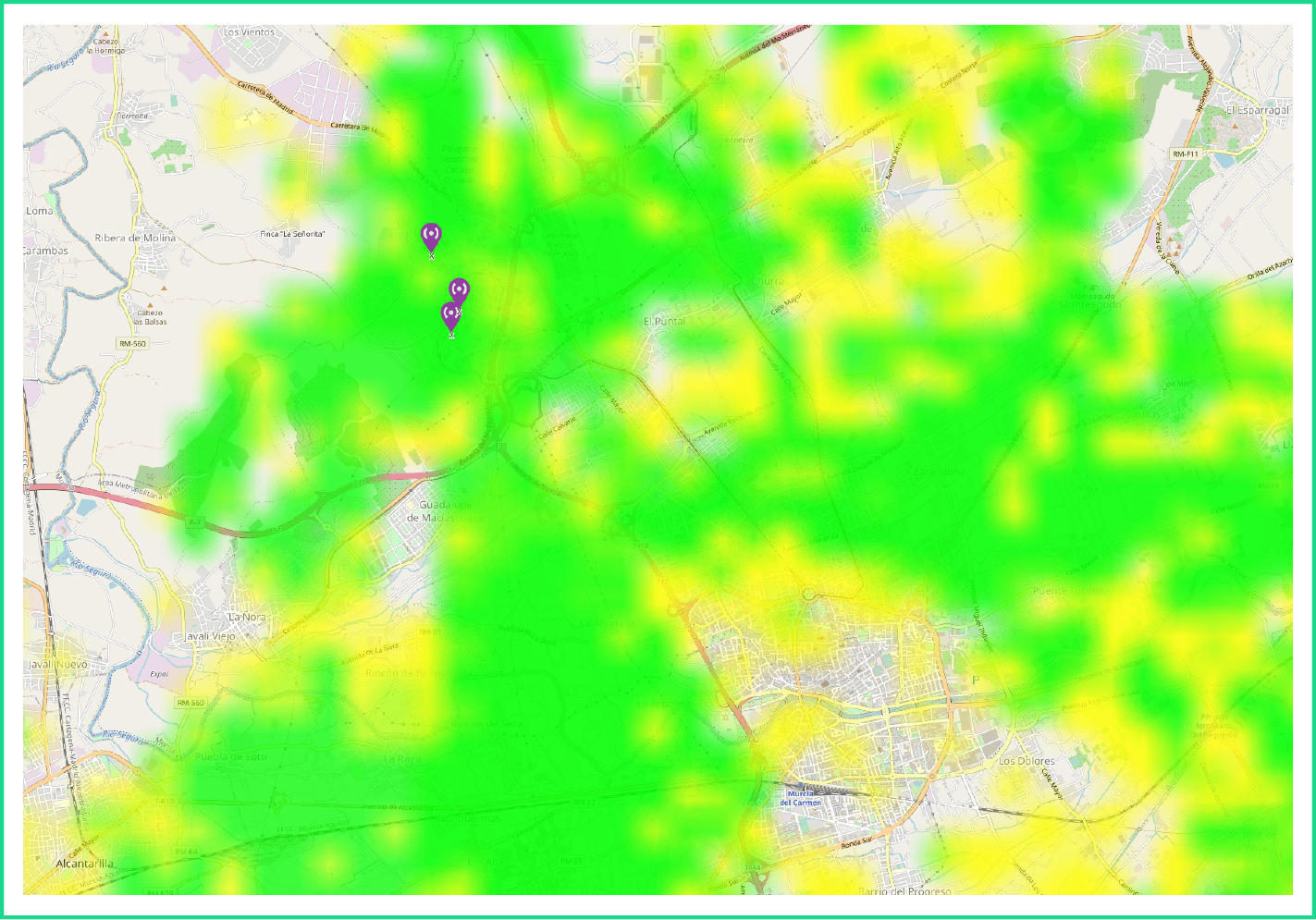
5G coverage map
The simulated and subsequently
experimentally validated 5G coverage plan of
the two deployed sites is approximately as illustrated in the
following image.
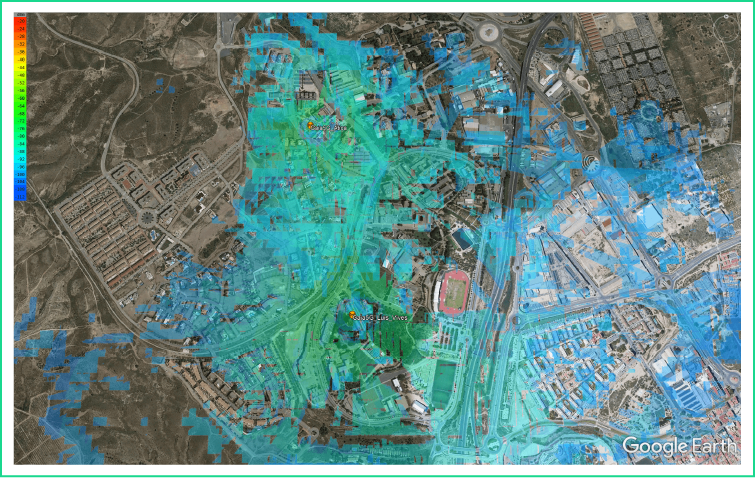
LoRaWAN coverage map
Once the three LoRaWAN gateways are deployed,
the expected coverage is illustrated below, based on simulations
conducted using
Radio Mobile Online ↗︎
.